types of rooftop SOLAR
This is the most primitive form of Solar Energy to generate electric power since invention. In the off-grid rooftop solar power system. efficiently even without the grid supply. This system includes heavy investment in buying the batteries that are the primary component.
How off-grid Solar System works
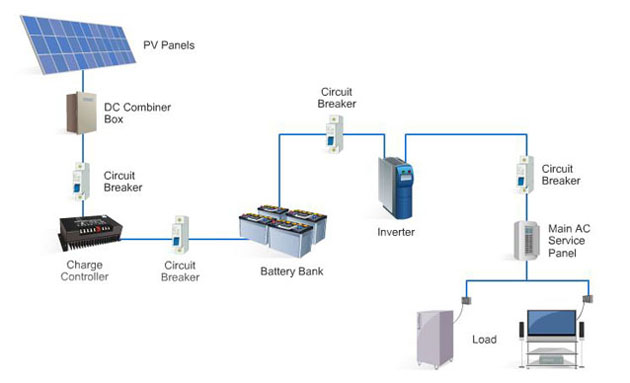
- Sunlight(photons) that falls on the solar panels is absorbed partially, eliminating the electrons on the panel establishing the DC (electricity).
- The solar charge controller sends the direct current to the batteries to store the power in form of DC and also to the Solar inverter unit as needed.
- The solar inverter converts the DC into AC power.
- The AC electricity is now supplied to our house for using electronics by the inverter.
- Another functionality of the solar controller is to balance the batteries from getting overcharged or undercharged. It regulates the DC power.
- Extra power generated beyond the capacity of the battery and the power capacity of the house, is wasted. Only the power is consumed by the house.
- The battery itself consumes about 3 units of power to recharge. Each battery has about 800-1000 Charging cycles, which means, the battery gets charged and discharged for 800-1000 cycles.
- The power supply to the house can be active during the daytime on sunny days, and till the backup power is discharged by the batteries.
- The off-grid systems connected with the grid array manually will also receive the power from the grid. The charges per unit of electricity are expensive and can replenish upon use.
- Most of the time, an off-grid solar system is not used because it includes a heavy battery set up and the batteries consume about 3 units of power to charge & discharge.
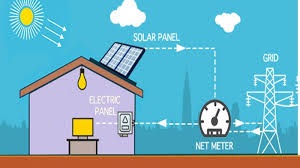
An on-grid solar system also called a Grid-tied solar connection works only when our house has a connection to the Power Grid or transformer. This eliminates the necessity of solar batteries. The on-grid solar system is recommended when we want to get lesser electricity bills, and there is sunlight in the daytime, reaching our house.The sunlight absorbed by the solar panels is sent to the solar inverter, which converts the sunlight into DC current and then converted to AC power also.The inverter is called a grid-tied inverter, which converts the DC to AC. This AC form of electricity is sent to the switchboard power supply of the house and to the connected Power Grid, via the solar Net Meter Unit.The AC sent to the switchboard is sent to the load unit of the house, based on the power capacity of the house.
The Net Meter Unit has two functions.
- First, to keep track of how much power supply is sent to the solar Grid Power supply and to the house for utility.
- Secondly, to send the excess power generated by the solar panels to the grid power supply.
The advantage of an on-grid solar power system is, the electricity consumption is calculated by the Net meter reading. Because of not having the Batteries as an additional setup, the maintenance for the on-grid solar system is easier.
NOTE:
- The only major disadvantage of this system is, there would be no power supply from the solar panels generated if the grid supply system doesn’t generate power in the complete system.
- There is no additional backup system to generate power. This is the only challenge to overcome in an on-grid solar system.
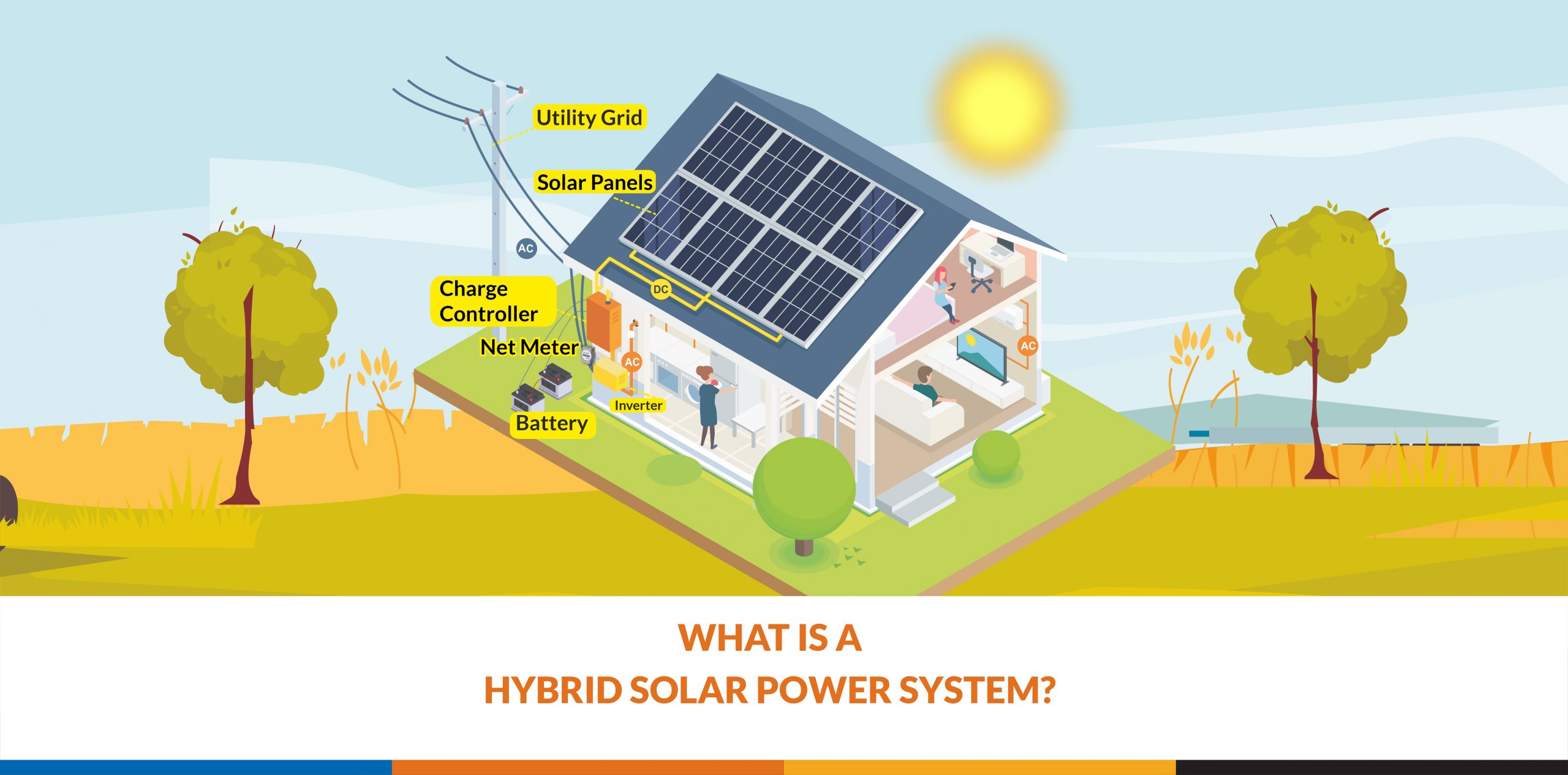
This type of solar system is the combination of on-grid solar power systems and off-grid solar power systems. This model of solar power system includes batteries and is also connected to the grid power supply. Hence the maintenance is high, the system is integrated, the backup of the power supply is assured.
How does a Hybrid solar power system work?
The power supply is mostly done from the batteries. The solar panels generate power by converting the sunlight to DC. The generated power supply is utilized to recharge the batteries. These batteries work as a backup in the absence of sunlight.
The grid power supply to which the hybrid solar system is connected supports in supplying power to the house.